


Tendon Transfer Surgery: A Complete Guide
By: Suleiman Sudah, M.D., Shoulder & Elbow Surgeon at Seaview Orthopaedics.
Are you living with persistent shoulder pain, weakness, or loss of motion after being told you have an irreparable rotator cuff tear? Perhaps you have tried physical therapy, injections, or even previous surgery, only to find that your shoulder function has plateaued. Or perhaps you have been told that because your rotator cuff cannot be repaired, your next (and possibly only) option is a reverse shoulder replacement.
But what if your shoulder joint itself is still relatively healthy?
For appropriately selected patients, especially active people who want to keep their natural shoulder joint, tendon transfer surgery may offer another option.
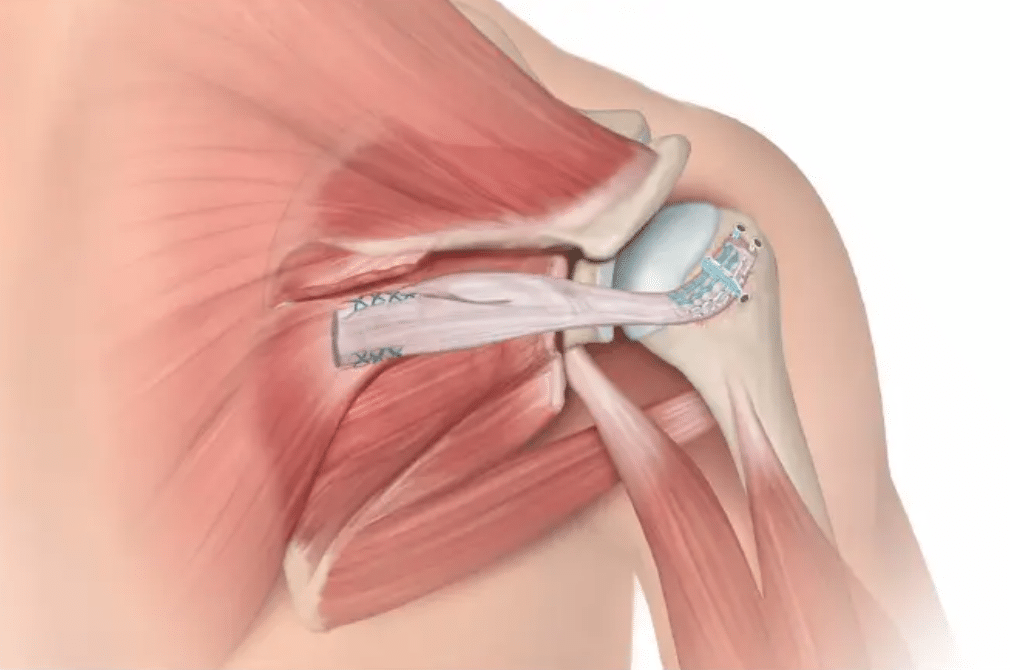
Rather than replacing the shoulder joint, a tendon transfer uses a healthy, functioning muscle and tendon and redirects its force to compensate for the tendon or muscle that is no longer functioning properly.
This specialized form of shoulder reconstruction is used to treat irreparable or recurrent rotator cuff tears and chronic nerve-related muscle dysfunction. The sections below explain how it works, which conditions it treats, how candidates are evaluated, and how it compares with other treatment options.
What Is Tendon Transfer Surgery?
A tendon connects a muscle to a bone. When a tendon is severely damaged, or when the muscle it controls can no longer produce a particular movement, normal function may be lost. A tendon transfer addresses this by taking a healthy, functioning tendon—along with its muscle—and changing its attachment so that it can help perform the movement that may have been lost.
Think of it as redirecting an existing source of muscle power to accomplish a different task.
Tendon transfers have been used in reconstructive surgery throughout the body, including the:
In each case, the tendon selected depends on the movement that needs to be restored and the muscles and tendons that remain functional.
What Shoulder Conditions Can Tendon Transfer Surgery Treat?
A tendon transfer can help treat several shoulder conditions. Below are the most common ones we see at our Monmouth, Middlesex, and Ocean County offices.
Irreparable Rotator Cuff Tears
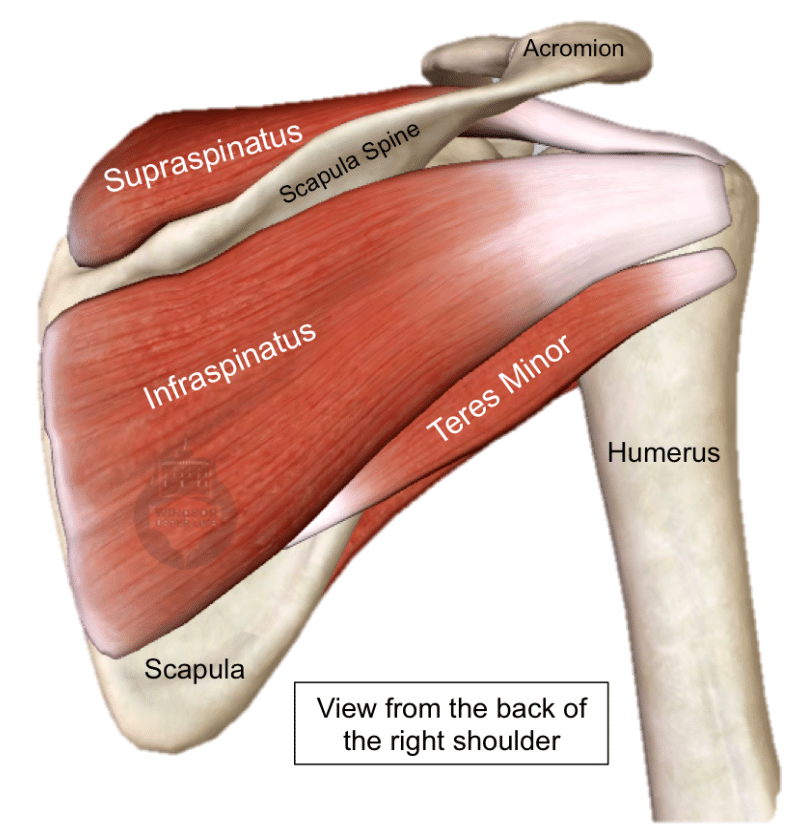
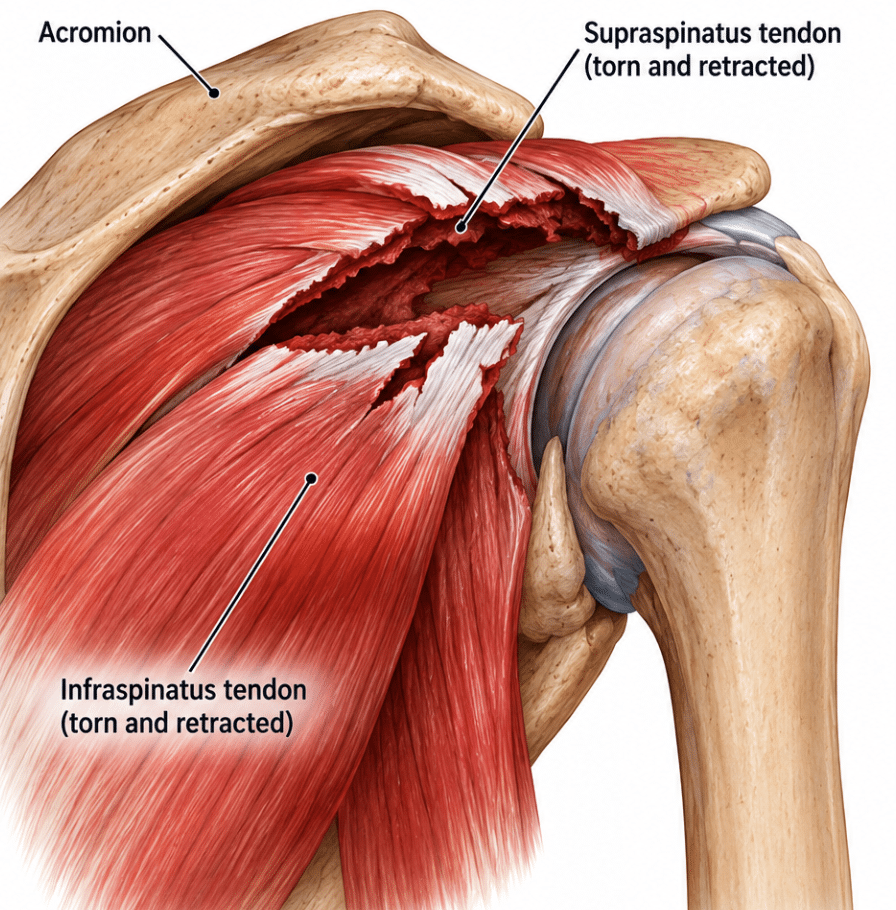
A rotator cuff tear is described as irreparable when the tendon cannot reasonably be restored to its original attachment through conventional repair.
This can occur with chronic, large, or extensive tears. Over time, a severely torn tendon may retract, while the associated muscle can undergo atrophy and fatty changes. In these circumstances, simply reattaching the tendon may not provide a reliable way to restore its function.
Instead of relying on the damaged rotator cuff tendon, a tendon transfer redirects a functioning tendon so that its muscle can perform the movement that has been lost.
Failed Rotator Cuff Repair
A rotator cuff repair can sometimes tear again after surgery. Re-tearing can be associated with factors such as:
- Patient age
- The size and chronicity of the original tear
- The quality of the tendon and muscle tissue
- The demands placed on the shoulder
When a repair fails, another repair is not necessarily appropriate or technically possible. In some patients, the tendon tissue has become too compromised to support another repair, so the surgeon must consider not only whether the tendon is torn, but also whether enough healthy tissue and functional muscle remain to make another repair worthwhile. When they don’t, tendon transfer offers a reconstructive alternative.
Nerve Injuries and Muscle Paralysis
Not all shoulder weakness or dysfunction is caused by a torn tendon. Nerve injuries can prevent a healthy muscle from receiving the signals it needs to contract, so even when the tendon itself is structurally preserved, the muscle may no longer be able to produce useful movement. In these select cases of nerve-related muscle dysfunction, a tendon transfer can redirect the force generated by a functioning muscle to compensate for a lost movement.
This distinction matters for treatment. With a rotator cuff tear, the problem is the tendon itself; with a nerve injury, the problem is the loss of muscle activation. A careful examination is essential to determine what is actually causing a patient’s weakness.
Which Tendon Is Used During Tendon Transfer Surgery?
Below, we’ve outlined which donor tendon is typically used for each shoulder condition and the shoulder movement it helps restore.
| Underlying Shoulder Condition | Movement / Function Affected | Tendon Transfer Considered | Primary Goal of the Procedure |
|---|---|---|---|
|
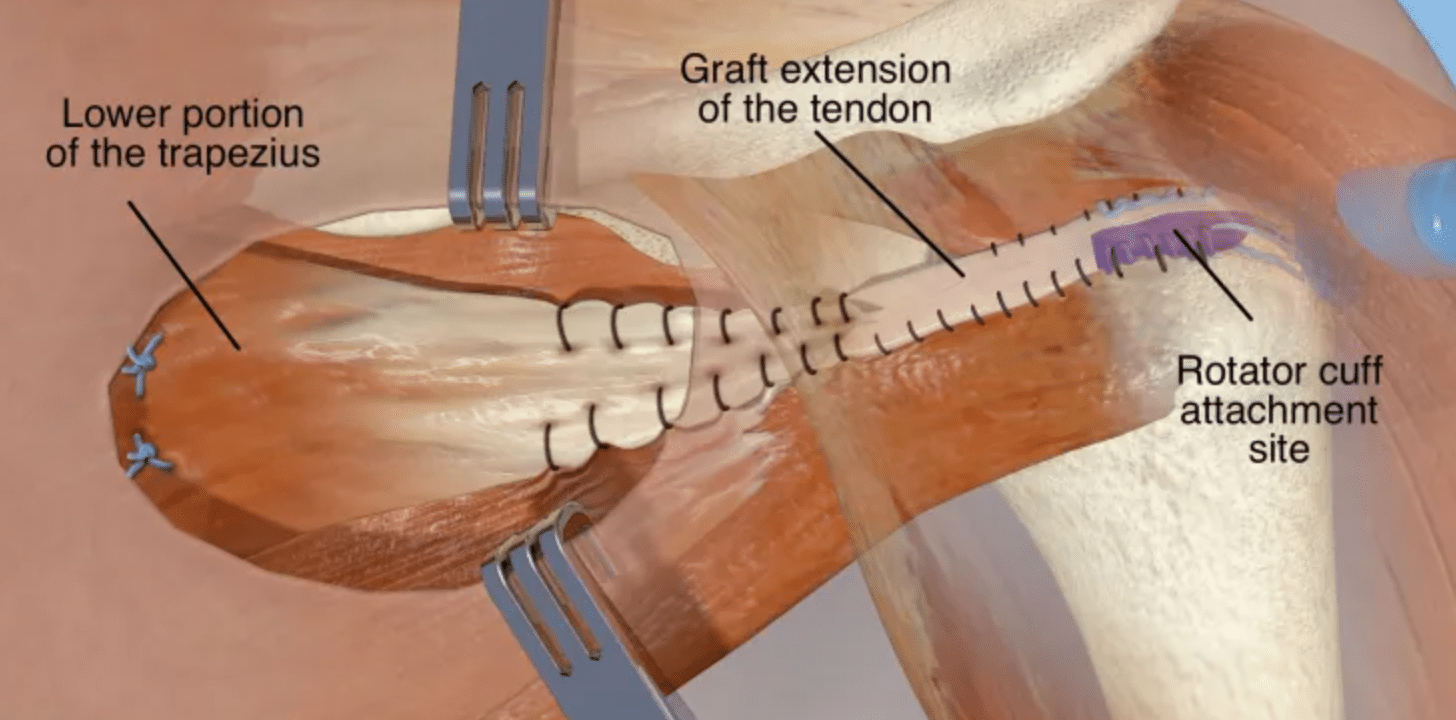
Active overhead elevation and external rotation | Lower Trapezius Tendon Transfer | Compensate for chronic posterosuperior rotator cuff deficiency, restore overhead elevation and external rotation motion and strength, and relieve persistent pain. |
|
Internal rotation and anterior shoulder stability | Anterior Latissimus Dorsi Tendon Transfer With or Without Teres Major Tendon Transfer | Compensate for subscapularis muscle weakness, restore internal rotation motion, strength, and anterior shoulder stability, and relieve persistent pain. |
Who Is a Candidate for Tendon Transfer Surgery?
Knowing which transfer fits a condition is only the starting point. Tendon transfer is not simply an operation performed because a tendon cannot be repaired. Candidacy is typically based on four factors:
- Whether the tendon can be repaired: If a torn rotator cuff can be repaired and is likely to heal, repair comes first. Tendon transfer becomes an option when the tear is chronic, extensively retracted, or associated with significant muscle changes.
- The condition of the shoulder joint: At Seaview Orthopaedics, we evaluate the condition of the shoulder joint itself, including whether there is arthritis or other joint damage. This is particularly important when considering a joint-preserving reconstruction. A tendon transfer is designed to address a loss of muscle-tendon function; it does not replace a damaged or arthritic joint.
- The health of the donor muscle: The potential donor muscle must also be healthy enough to perform its new function. This means assessing the strength and function of the donor muscle and tendon as well as the nerves that supply it. A tendon that appears structurally healthy may not be a suitable donor if its muscle is weak or its nerve supply is compromised.
- Goals and commitment to rehabilitation: A patient’s ability and willingness to participate in a structured postoperative rehabilitation program is also an important part of the decision, because tendon transfer surgery requires time and rehabilitation to retrain the transferred muscle for its new function.
Certain findings may make tendon transfer candidacy less appropriate. These can include advanced arthritis or other significant joint damage, associated subscapularis muscle or tendon deficiency, or circumstances in which the expected functional benefit or rehabilitation demands do not align with the patient’s goals.
In these situations, another treatment strategy may be more appropriate. At Seaview Orthopaedics, our orthopedic specialists review each of these factors during a consultation to determine whether tendon transfer or another approach offers the best path forward.
How Is Tendon Transfer Different From Other Shoulder Treatments?
Tendon Transfer vs. Rotator Cuff Repair
Although both procedures treat a torn rotator cuff, repair and transfer solve different problems.
Rotator Cuff Repair: When a torn rotator cuff tendon can be successfully repaired and reattached to the bone, rotator cuff repair is generally the preferred approach. Repair preserves the original anatomy by restoring the tendon to its native attachment and allowing the tendon and muscle to resume their intended function. Repair is typically performed arthroscopically and may include a patch to augment tissue quality.
Tendon Transfer: A tendon transfer addresses a different situation. When a tendon is no longer repairable, or when the condition of the tendon and muscle makes another repair unlikely to provide adequate functional restoration, a functioning tendon from elsewhere may be redirected to compensate for the lost function. The procedure typically combines an open incision to harvest the tendon with an arthroscopic approach to reattach it. A cadaver tendon graft (allograft) is commonly used. The graft does not replace the patient’s tendon; instead, it serves as an extension or “bridge” when additional length is needed to reach the new attachment site.
Tendon Transfer vs. Reverse Shoulder Replacement
Tendon transfer and reverse shoulder replacement are fundamentally different approaches to shoulder reconstruction.
A tendon transfer uses a patient’s own functioning muscle and tendon to compensate for a tendon or muscle that is no longer functioning adequately. The native shoulder joint remains in place. This makes tendon transfer a joint-preserving approach when the condition of the shoulder and the patient’s overall circumstances make preservation appropriate.
A reverse shoulder replacement, by contrast, changes the mechanics of the shoulder joint through an implant. It is designed to allow the shoulder to function differently when the normal rotator cuff mechanism is no longer able to provide adequate function. Reverse shoulder replacement may be appropriate for certain patients with rotator cuff deficiency, particularly when the shoulder joint has significant degenerative changes, although the specific indications are individualized.
The choice between these approaches is not based on the rotator cuff tear alone. Important considerations include the presence and degree of arthritis, the condition and function of the surrounding muscles and tendons, age, activity level, and the patient’s goals.
For some patients, a reverse shoulder replacement may be a reasonable option. For others—particularly younger, active individuals with a relatively healthy joint and adequately functioning donor muscles—a tendon transfer may be the preferred first option. A detailed evaluation is necessary to understand which reconstructive options are appropriate.
Tendon Transfer Surgery for Shoulder Conditions in New Jersey
Tendon transfer surgery is a highly specialized area of shoulder reconstruction, and experience with these procedures matters. Dr. Sudah’s training in tendon transfers began during his Shoulder and Elbow Fellowship at Massachusetts General Hospital and Harvard Medical School. There, he learned and performed these complex reconstructions alongside Dr. Bassem Elhassan, an internationally recognized leader in reconstructive shoulder surgery, who has played a major role in developing and advancing modern shoulder tendon-transfer techniques. Dr. Sudah’s goal is to bring highly specialized shoulder reconstruction expertise to patients in New Jersey who may otherwise have been told that their treatment options are limited. For appropriately selected patients, this can provide access to advanced tendon-transfer techniques without necessarily requiring travel to a major tertiary referral center.
If persistent shoulder pain, weakness, or a rotator cuff tear that couldn’t be repaired is making it difficult to lift, reach, or stay active, it may be time to explore your treatment options. At Seaview Orthopaedics, our orthopedic shoulder specialists work with patients to develop individualized treatment plans, from physical therapy and nonsurgical care to rotator cuff repair, tendon transfer, and shoulder replacement when appropriate.
With more than 40 years of experience and a network of locations across Monmouth, Middlesex, and Ocean Counties, Seaview Orthopaedics makes specialized shoulder care accessible close to home. Don’t let shoulder weakness keep you from doing what you love. Book an appointment online or call our office at 732-660-6200 to learn more about tendon transfer surgery and our shoulder treatment options.
Meet Dr. Sudah
Dr. Sudah is a fellowship-trained orthopaedic surgeon specializing in shoulder and scapula disorders. After earning his medical degree from Rutgers Robert Wood Johnson Medical School and completing his orthopedic surgery residency at Monmouth Medical Center, he completed his Shoulder & Elbow Fellowship at Harvard/Massachusetts General Hospital, along with a traveling fellowship in Antwerp, Belgium, focused on advanced elbow surgery and upper extremity reconstruction. He treats both common and complex shoulder conditions using arthroscopic and open techniques, including shoulder replacement, tendon transfers, rotator cuff surgery, shoulder instability, and complex reconstruction after failed prior surgery. A former collegiate athlete and New Jersey native, Dr. Sudah cares for competitive athletes, active adults, and patients seeking relief from chronic pain.
Frequently Asked Questions
How Painful Is Shoulder Tendon Transfer Surgery?
Pain after tendon transfer surgery varies from patient to patient. Some postoperative pain and discomfort are expected, particularly during the first 1–2 weeks, but the pain is generally within the range expected after other open and arthroscopic shoulder procedures.
What is more important is what happens over time. Once the initial postoperative period has passed and the tendon transfer has healed, published studies consistently demonstrate meaningful reductions in shoulder pain compared to preoperative status.
How Successful Are Tendon Transfers?
For the right patient, tendon transfer surgery can provide meaningful improvements in pain, shoulder motion, strength, and overall function. Studies consistently show improvement in patient-reported outcome measures (PROMs), which assess how patients perceive their pain, function, and ability to use their shoulder in everyday life.
How Long Does Recovery Take After Tendon Transfer Surgery?
Recovery after tendon transfer surgery takes time. Most patients should expect approximately 8 weeks of protection in a sling, followed by 8 weeks focused on restoring motion, and then 8 weeks of progressive strengthening. Return to more demanding activities is generally around 6 months, although recovery does not end there. Many patients continue to see improvements in strength, motion, and function for up to a year after surgery.
What Are the Risks of Tendon Transfer Surgery?
Like any surgery, tendon transfers pose risks, such as infection, bleeding, stiffness, persistent pain, incomplete healing or failure of the transferred tendon, and injury to nearby structures. Fortunately, serious complications are uncommon. In some cases, symptoms and function may not improve as much as expected, which may require additional surgery.